Friday, 2 May 2014

Hearing loss – helping a loved one


If you are reading this column it is because you suspect that someone you care about might have a hearing loss. And you want to help. Hearing is an easy thing to take for granted.
Initially, you may have a giggle at their misunderstanding of words or the bizarre interpretations they come up with, but after a while the daily miscommunication will lead to concern and frustration of having to repeat yourself. Age-related hearing loss generally occurs gradually. As a result, it is often family and friends who are the first to notice the problem.
Things are not nearly as easy with a hearing loss. It is dicult to converse in a crowded room or over the phone. It is not that things are not always loud enough, but that they are not clear enough. People often claim that there would not be a problem if others would just stop mumbling. Sounds fade so gradually that they can disappear unnoticed, for example when the birds stop chirping.
Left untreated, hearing loss can aect relationships between the person aected and their family and friends, quietly eroding their quality of life. That is why it is important to motivate your loved one to get their hearing tested and to take the necessary action, and to learn how you can help with any communication diculties.
In my practice in Ipswich we often have children contacting us who are concerned about their parents or, as they’ve been trying to call them on the telephone all day and they don’t answer, or others who have broken into their parents’ house after repeatedly knocking on the door, only to find them blissfully unaware in the back garden.
Quite often, because of the stigma attached to hearing loss, elderly parents don’t respond to initial prompts from their children to have their hearing tested.

Why is there so much resistance?

The main reason is denial. Many older adults just don’t think they have a problem.
We know from research that it takes people with hearing loss 5 to 10 years before they have their hearing tested, and more than four million people in the UK who would benefit from wearing hearing aids, don’t have one.
Tips to convince loved ones to have their hearing checked
  • Talk to them about the benefits of seeking help and the things they are missing out on, such as social occasions or physical activities.
  • Reassure them that modern devices are small, discreet and the technology is simple and automatic.
  • Discuss the dangers of undiagnosed hearing loss—for instance, not being able to hear properly while driving, or the simple fact that leaving it untreated will only make it worsen quicker.

For more information on hearing loss or to book a hearing test, either visit www.hearingcarecentre.co.uk or call 01473 230330.


Wednesday, 26 March 2014

Helping your mother to hear


With Mother’s day coming up, we sons and daughters are quick to realise all of those little things that our mum did to make our childhoods easier and more care-free. It’s these little things that make all the difference to us as we celebrate Mother’s Day this March. Wouldn’t it be great if we could finally repay them for their many years of service by helping make their lives easier?
One such little thing, hearing loss, may be a big issue for many mothers out there and can be easily cared for with a hearing test and consultation with your local audiologist. Imagine helping alleviate any struggles with conversations and hearing in noisy environments for your mother this year.

I am certainly finding that more and more women are dealing with hearing loss issues and are not taking the measures to get the care they deserve. One reason is due to a resistance to wearing hearing aids. Sadly, some people still feel there is a stigma attached to wearing them, as though it’s an admission that they are getting old, and perhaps by association, doddery too! This is so far away from the truth as in fact hearing aids keep you young, they keep you involved in conversation with friends and loved ones.
Show your love for your mother this Mother’s Day by accompanying her to an appointment with an audiologist. I feel strongly that no one should have to struggle with hearing loss when there is something that can be done.

For more information on hearing loss simply click here.


Monday, 10 March 2014

The Hidden Dangers of Purchasing Hearing Aids Off the Internet

At first glance, the idea of buying hearing aids online off the Internet may seem like a good one, whether its from a website like eBay or an online retailer, especially when they appear to be low cost or budget hearing aids. But unfortunately it’s based on a number of important misunderstandings that the online retailer will conveniently neglect to tell you about.


So read this first, to you understand how to avoid falling into the same trap others have.

1. Hearing Aids are not a ‘white good’…

People often mistakenly think that a hearing aid is much like a television, or a computer, or a HiFi, and so they expose it to the normal ways they would expect to go about purchasing these types of goods: shop around, compare features and prices etc.

But hearing aids are not white goods! They are MEDICAL devices.

Hearing aids therefore need to be correctly PRESCRIBED and FITTED by someone who is trained and qualified to do so. If you are not fitted with the correct one for your hearing and hearing requirements – at best, it will be ineffective; at worse, it could actually damage your hearing.

2. Hearing Aids need programming…

When you get a hearing aid, it is a bit like a blank slate that needs to be programmed to your hearing and hearing requirements. This requires specialist equipment, software from the manufacturer and someone who knows how to use it properly.

If you purchase off the Internet, how will you be able to use it if it hasn’t been programmed? Bearing in mind that programming is a two way process, part of which involves listening to you and making adjustments accordingly.

3. Internet retailers of hearing aids are not regulated…

In the UK there are various bodies that regulate the sale of hearing aids. The most important one is the Hearing Aid Council, which is the Government’s regulatory body for the private sale of hearing aids. The Hearing Aid Council specify who may ‘dispense’ hearing aids privately, and how they must do it – in order to protect the consumer.

Unfortunately their powers do not apply to Internet Sales. Therefore they cannot protect you, and the Internet retailer has no responsibility to adhere to the Hearing Aid Council’s standards of ethics and competence. You may be protected by Trading Standards and the Office of Fair Trading, but if the Internet Retailer correctly described it and it’s technically fit for purpose you may find you don’t have the comeback you need to get the best out of your hearing.

Purchasing face-to-face from someone who’s registered with the Hearing Aid Council means that at the very least, you will be dealing with someone who has a legal responsibility to prescribe and fit the item that’s right for you (or the person you are purchasing it for), with a Regulator you can turn to in the rare case you’ll need to.

4. The hearing aid manufacturer works closely with the professional…

Hearing aid manufacturers work closely with hearing care professionals to ensure they properly understand the product they are prescribing and fitting. Purchasing from an online retailer loses this important partnership which plays a key role in as successful fitting.

5. The Online Cost does not include professional time and ongoing support…

Have you never wondered why the cost is so different online from what professional practices will quote? It’s because the price from a professional practice will include the costs of having a qualified person fit the hearing aid, monitor your progress and provide you with ongoing support.

Imagine someone telling you they thought they needed a filling, and went online to look for the ‘best value’ filling they could find. It just wouldn’t happen.

But imagine it arrived in the post… they’d still need someone to fit it. And then they’d end up having to pay the dentist’s fees – assuming they could convince them to fit it!

With hearing aids, the cost includes the hearing aids, the cost of fitting it and very often the ongoing support too. So it can be thought of as a complete solution. This means that if something changes (e.g. wax gets in and blocks the electronics, or your hearing changes) your hearing care professional will be able to provide you with the proper support you need when you need it. That may involve reprogramming, or servicing/repair, or advice, or maybe even referral to an appropriate medical practitioner.

6. And you may not find anyone to programme it…

Most hearing care professionals are reluctant to touch a hearing aid that they have not supplied themselves. This is for two main reasons.

Firstly, the success of a hearing aid fitting depends on the combination of having the right technology and the right professional support. Fitting something they have not prescribed invites all sorts of problems, and it will leave you uncertain as to whether it’s the technology or the professional. This is something that most professionals are unwilling to risk, as it obviously affects their professional reputation.

Secondly, hearing care professionals rarely have fee structures broken down into separate appointments that would allow them to carry out aftercare for something they have not provided themselves. The reason for this is very simple: often adjustments are made by the hearing care professional as part of an incremental process that involves you seeing how they perform for you out in the real world, followed by another adjustment, followed by trying them out again, followed by another adjustment etc.

So the number of appointments you need can easily stack up, and that’s not including any ongoing maintenance you’ll need over the longer term. If you were to be charged for each and every appointment, you may find it easier to simply to ‘put up with’ the settings, rather than complete the necessary adjustment process. Worse still, you may stop using the hearing aids altogether.

This is why the profession has generally found that providing a price that includes the ‘hardware’ and the ‘software’ (professional time and support) has suited both patients and professionals alike: everyone knows where they stand.

Conclusion...
If you are considering purchasing hearing aids online, our advice is DON’T.

Find a local practice you know will look after you (or the person you are purchasing them for). Their training, knowledge, experience and understanding of your hearing and your needs will provide you with a tailored solution that’s right for, with the added protection of being within the context of a properly regulated profession.

If you already have purchased online, speak to Trading Standards for advice.

Thanks to the Association of Indepdendent Hearing Healthcare Professionals (AIHHP) for this blog post. For lots more information please visit their website... www.aihhp.org

Wednesday, 26 February 2014

World's First 'Made for iPhone' Hearing Aid

I am very excited as I write this post because the world of hearing aids is about to be given a shake up. For some time hearing aids have had an negative image attached to them, but a new technology advancement is about to make hearing aids very cool indeed!

Danish hearing aid manufacturer, GN ReSound, has just launched its latest product 'LiNX' over in the United States and is due for release here in the UK later this year.

This new hearing instrument connects directly to iPhones and other iOS devices, allowing wearers to talk on the phone or listen to music, without any intermediary devices, and is the first of it's kind.

Launching alongside the LiNX is a new iOS app that works as a remote for the hearing aid, allowing wearers to adjust volume levels, equalisers, and switch between preset environments for the hearing aid, allowing the device to optimise to the user's environment.


Hearing aids can have several different modes, adjusting to the acoustics of each environment -- the app even uses geofencing to automatically change sound profiles based on the location of the wearer, changing for work, home, or a favorite restaurant. There is also a "Find My Hearing Aid" function to help users find their device if it's lost.

Previously, hearing aid wearers would need to carry a pendant or other wireless device in order to make changes to settings on a tiny hearing aid -- adjusting volume or switching between profiles -- now, users can make those changes directly on the iPhone, a device that many are carrying anyway in a significant quality of life improvement.

It also allows users to listen directly to games, calls, FaceTime conversations, music, and any other audio directly from the iOS device, without a handheld dongle or other intermediary devices.The technology will be available in hearing aids from both GN ReSound and its sister-brand Beltone.

Who said that hearing aids couldn't be cool?


Wednesday, 19 February 2014

New Technology Advancement For Profound Hearing Losses


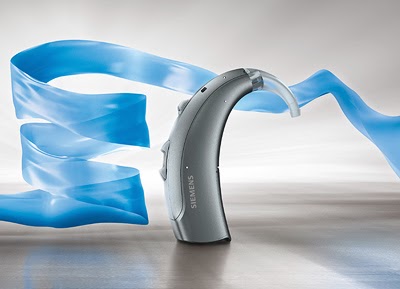
World renowned hearing aid manufacturer, Siemens, has just released a new hearing aid for people whose hearing is severely impaired. The hearing aid is so thin that it can fit behind the ear of a hearing-impaired baby.

The new device, known as 'Nitro', is one-third narrower than its predecessor, and reason being because that it is equipped with high-performance microchips.

The new device offers an unprecedented sound volume even at the high amplification required for severely hearing-impaired users.

An important feature of hearing aids is that they sufficiently amplify speech to make it easily audible, but at the same time offer a sound experience that is as comfortable and balanced as possible.

The hearing aid receives sound waves through two microphones. The microchips split the sound waves into individual frequency ranges, on the basis of which they create a finely tuned sound no matter what the acoustic situation. The system automatically offsets audio feedback that creates an annoying whistling sound.

Although hearing aids generally have trouble dealing with a babble of voices such as occurs at parties, the new system can also handle such situations by making background discussions quieter so that the wearer can concentrate better on what his or her interlocutor is saying.

The technology within the hearing aid enables it to process a broader range of frequencies and split sounds into as many as 48 individually optimised channels.

Although this results in a huge number of calculations, it does not cause any noticeable sound delays, because the system processes 250 million commands per second. This makes listening with a hearing aid much less strenuous than was previously the case.

The signals from the two directional microphones are individually processed in parallel, enabling the system to more quickly eliminate audio feedback and identify sound sources so that irritating background noises can be filtered out.

Siemens engineers enabled left-ear and right-ear hearing aids to exchange data for the first time in 2004. This allows users to recognise differences in the signals received at each ear so that they can localise a sound source, for example.

I hope I have not bamboozled you with all of my technology speak. Suffice to say, this hearing aid is a fantastic advancement in helping those who have a profound hearing loss. The latest microphone technology in this device reduces listening fatigue substantially and right now no other hearing device for profoundly hearing impaired people can offer a comparable performance.

The key features to take from this new hearing aid are:
  • A third thinner than its predecessor
  • Very high sound volume and high amplification
  • Comfortable and balanced sound experience
  • Twin directional microphones: giving you more balanced hearing
  • Feedback management to filter out unwanted sounds
  • Wireless connectivity: compatible with a range of accessories allowing sound from audio sources directly to your ears


Wednesday, 12 February 2014

Don't let Hearing Loss Break Your Heart this Valentine's Day


“Are you even listening to me properly?”, “We’ve already discussed that.”, “You don’t understand me!” Let’s be honest: Is there anyone who’s never heard one of these phrases?

It’s no secret that functioning communication is a basic requirement of a harmonious and happy relationship. However, what if the relationship is the very thing that’s impaired, because one of the partners is affected by hearing loss?

One international hearing loss campaign, called Hear The World, has concerned itself with just that question and, in time for Valentine’s Day on 14th February, is publishing surprising results of the “Hearing is Living” study.

Among other things, it shows that 1 in 3 people with hearing loss feel more attractive, lead better partnerships and enjoy a more fulfilled love life since wearing a hearing aid.

This is fantastic, but worryingly, 50% of respondents with hearing loss but without a hearing aid, had not yet consulted a specialist about it, which makes studies like this so important as it helps to start the conversation and thereby raise awareness.

Taking action with hearing loss can make a huge difference to your life and your family’s life. If you are experiencing problems I urge you to book a hearing assessment with your local audiologist.

Digital hearing aids have proved to be a major success in the enhancement of people’s lives. The technology is available in entry, mid-range and superior classes all of which have different features and capabilities.
One of my patients wrote these few words which sums up her happiness ‘A year ago I came to you a living hell, now I am a living heaven. Thank you for improving my life….’
 

Monday, 3 February 2014

'Tinnitus was so loud, he was suprised I couldn't hear it!'

Imagine wearing a pair of headphones which are playing the sound of a whistling kettle.  Imagine wearing those headphones all day, and all night, seven days a week, 365 days a year.

Horrific it might sound, but that’s what life was like for one of my Suffolk patients – the victim of a debilitating condition known as tinnitus. The noise in his ears was so loud, he told me he was surprised I couldn’t hear it.

My company The Hearing Care Centre getting involved with Tinnitus Awareness Week this week (3rd-9th February 2014), to try and help raise awareness about the condition.

Although around one in ten of the UK population is affected by tinnitus (and that adds up to more than a few thousand in Suffolk alone) it’s extremely difficult to provide medical help because the sound isn’t usually caused by anything physical or biological which can be cured, it comes from within the sufferer themselves.

It appears drugs are no help either:   certainly there is not as yet, conventional or complementary medication that has been shown to ease tinnitus and it is thought that repeatedly trying unsuccessful therapies worsens tinnitus.

It was because he’d not been able to find relief that our man with the whistling kettle turned to The Hearing Care Centre.   Fortunately we know that in a large number of cases, tinnitus sufferers, who are often elderly, also have hearing loss which exacerbates the situation.

We tested his hearing and discovered he did have a significant hearing loss, and fitted him with hearing aids.   I won’t say it was a miracle cure, because it wasn’t, but he told us it had changed his life.  Now everyday sounds he hadn’t been able to hear because of the noises in his ears, were clearly audible, and they in turn, suppressed the aggravation caused by the tinnitus.

I cannot emphasise how much difference identifying the hearing loss made to this man.  At his first follow up appointment he said he had been to a restaurant and heard the conversation clearly– something he hadn’t heard clearly for years.

Unresolved tinnitus is more than just a noise:  it can make communication difficult for the sufferer and the unrelenting sounds can cause stress which in turn makes the condition worse.  It really is like a spiral; the condition causes stress and stress makes the condition worse.

Interestingly, experts believe that even those without significant hearing loss may find hearing aids are helpful. Straining t listen causes increased hearing sensitivity and this can allow tinnitus to emerge or, if present already, to worsen. Correcting even relatively mild hearing loss reduces this central auditory gain and thereby reduces the level of the tinnitus. Hearing aids are said to be useful even if the hearing loss is not at a point that aids would normally be considered.

Tinnitus Awareness Week is organised by the independent charity the British Tinnitus Association which is hoping to reach thousands of people of all ages across the country through its campaign.

For much more information, advice, support, videos or a FREE info pack, please visit www.hearingcarecentre.co.uk/tinnitus